Everent
Design Lead, Studio Kismet (FIEA capstone), 2025 to now
A momentum-based hoverboard game set across an open world of floating sky islands, built in Unreal Engine 5.7 and coming to Steam.
What I did
-
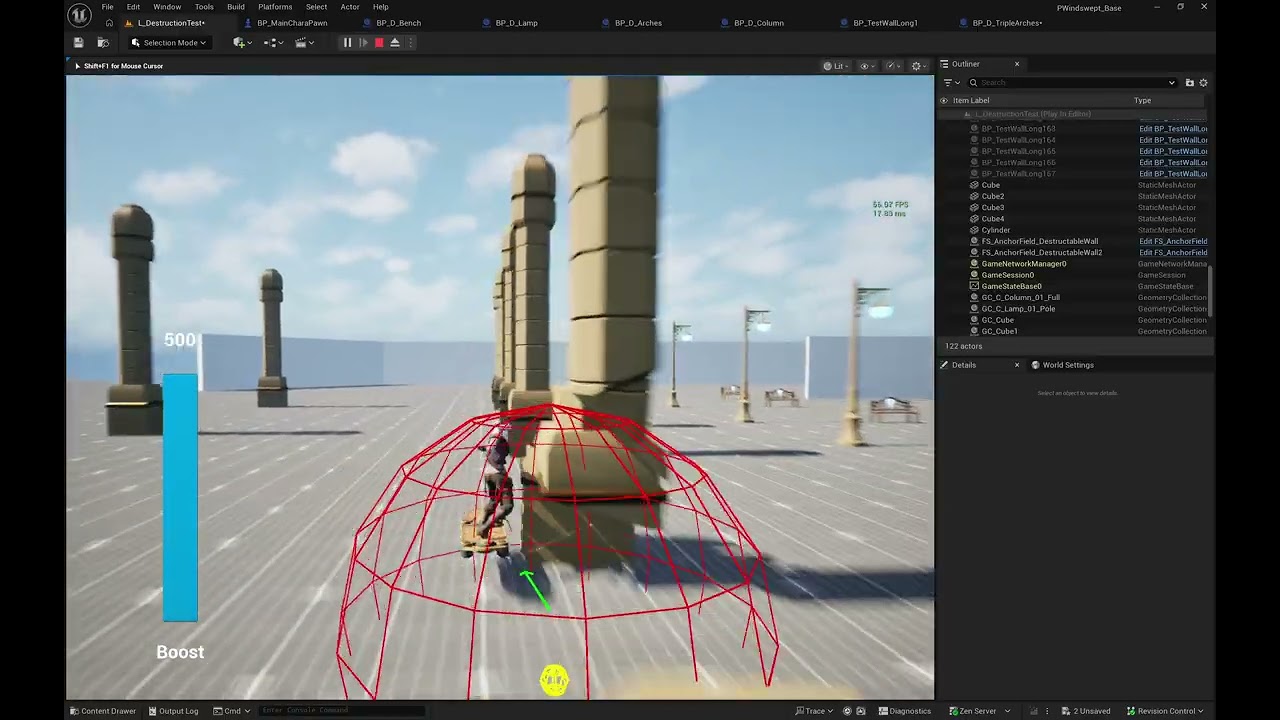
Walls only break if you hit them fast enough. I built it in C++ on Chaos Geometry Collections: two trigger volumes measure your speed on the way in, and the impact spawns a physics field with strain plus directional and radial velocity. We use it to hide secrets and to reward players who keep their speed up.
-
A panel under the Window menu that lists every destructible in the level, shows its tuning, and fires a test projectile with an in-place reset. Designers can tune breakage without entering Play mode.
-
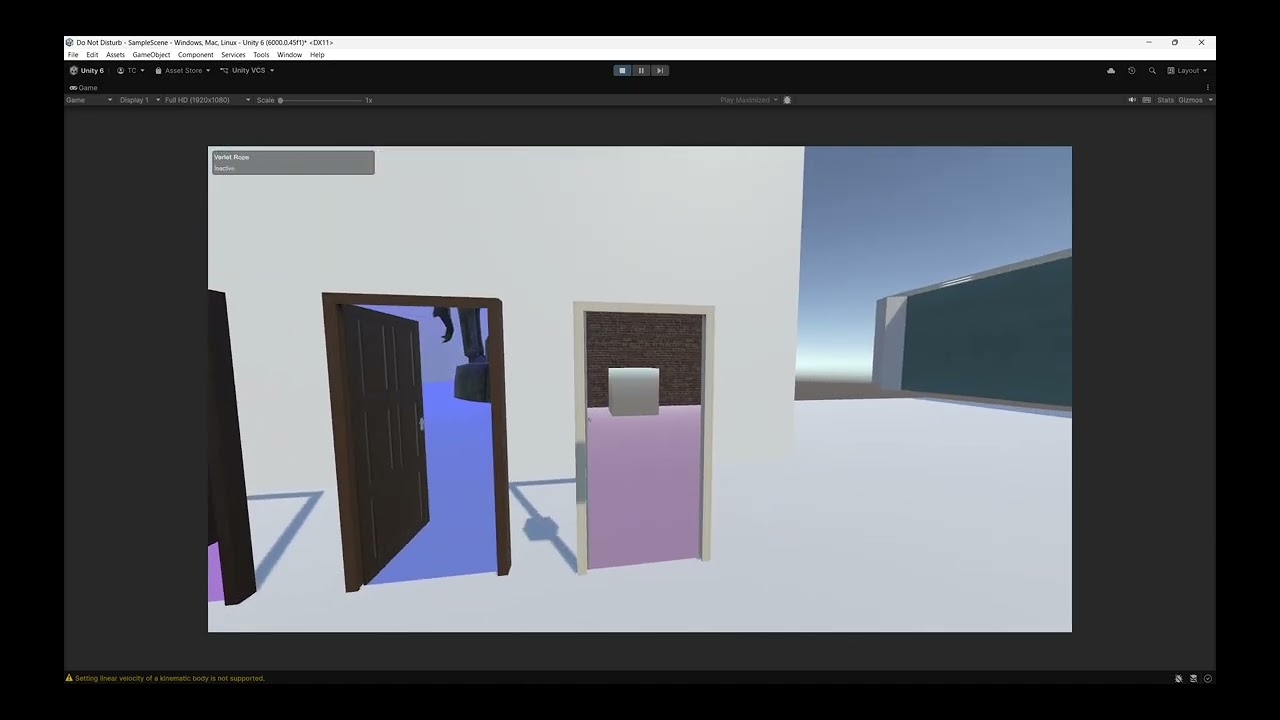
I built Everent's respawn system. The clip shows it running in the editor.
-
You can ride on any surface in Everent, so puzzles needed a hard limit. I wrote a C++ physical material that pushes the board away with world-space gravity, scales the push by approach angle, and turns off boost.
-
I led 7 designers from concept through production. I wrote the GDD and the one-page specs for movement, puzzles, and progression, ran sprint planning in Jira, and tuned the DualSense adaptive triggers for each surface type.
-
I prototyped a compute-shader flocking plugin for the koi, manta rays, and jellyfish that fill the sky. Niagara integration didn't work out, so I switched to instanced meshes driven by CPU readback.
-
I led the call on Lumen versus baked GI, the cost of Virtual Shadow Maps, and our HLOD plan, then wrote the team's graphics settings spec on UGameUserSettings with runtime scalability groups.
-
World Partition streaming broke destructibles in a few ways. I fixed a delegate that was binding twice, resolved overlaps at BeginPlay, and guarded destroy calls against actors that had unloaded.
-
I built a local pipeline (FFmpeg, faster-whisper, DeepFace, Llama 3.1) that turns playtest recordings into transcripts, emotion timelines, and coded feedback in the spreadsheet format our studio already used.
UE5.7, C++, Blueprint, Chaos, World Partition, Perforce, Jira